
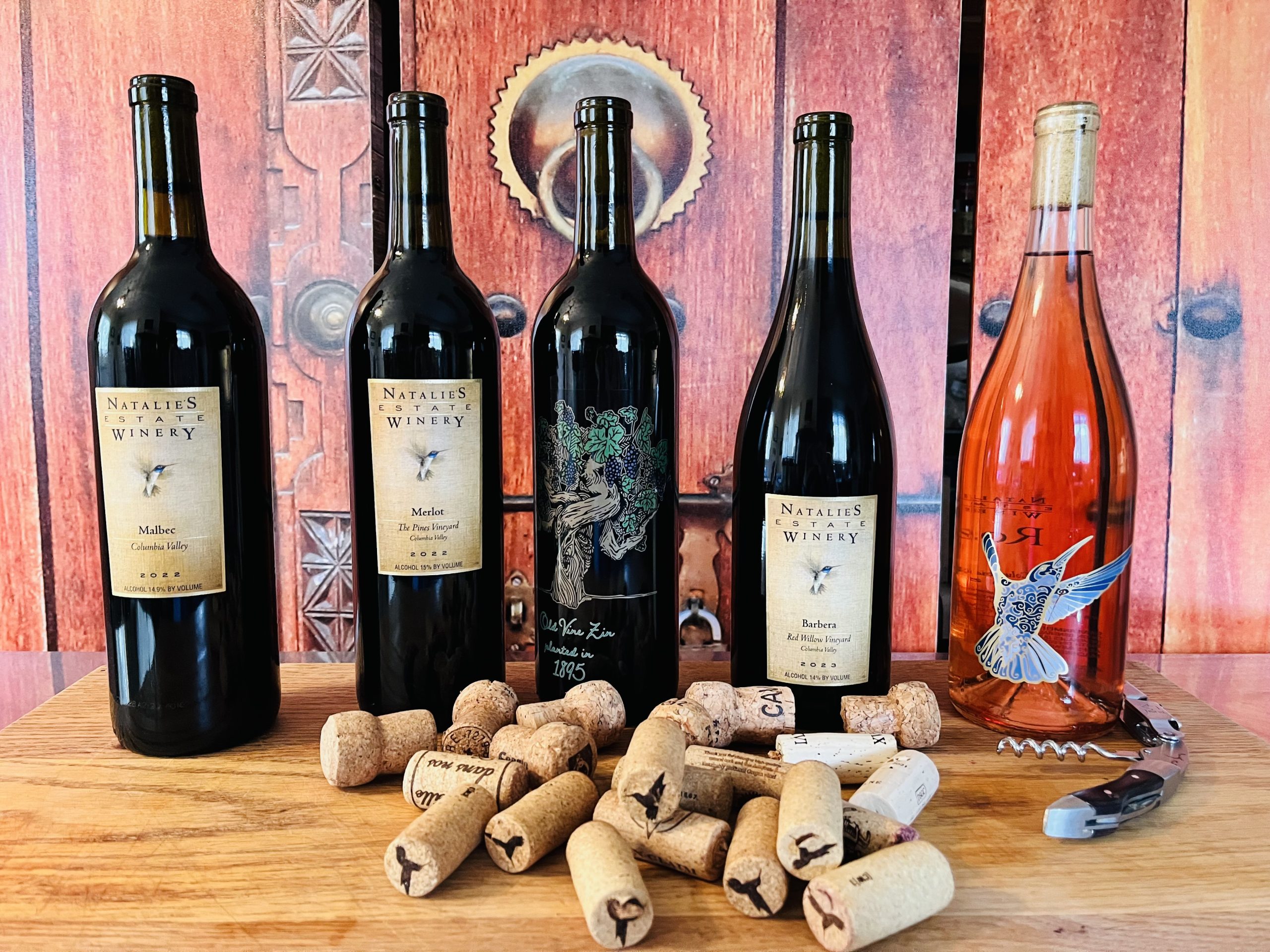
A Debate in the Wine World
Few topics spark as much discussion among wine lovers as cork vs screw top wine. When you reach for a bottle, does the satisfying pop of a cork signal quality? Or does the clean twist of a screw cap promise freshness and reliability?
The debate over corks vs screw caps goes beyond tradition. Closure choice directly affects how wine ages, how it tastes over time, and even its environmental footprint. At Natalie’s Estate Winery, a family-owned boutique winery in Oregon, every decision—from vineyard partnerships to bottling—is made thoughtfully. Closure selection is no exception.
Let’s explore both options and why each has a place in modern winemaking.
Where Cork Comes From
Natural cork is harvested from the bark of cork oak trees, primarily grown in Portugal and Spain. These trees are never cut down; instead, the bark is carefully stripped every 9–12 years, allowing the tree to regenerate. This renewable harvesting process is a strong example of the sustainability of natural cork.
A single cork oak tree can live for more than 200 years, producing cork throughout its lifetime. The process is labor-intensive, skill-based, and deeply rooted in tradition.
Sustainability of Cork Forests
Cork forests are ecological powerhouses. They support biodiversity, protect against desertification, and capture significant amounts of carbon dioxide. In fact, harvested cork trees absorb even more CO₂ during regrowth, making managed cork forests a climate-positive resource.
These Mediterranean ecosystems provide habitat for endangered species and sustain rural communities that depend on cork production.
New Uses for Recycled Cork
Sustainability doesn’t stop at the bottle. Wine cork recycling programs have expanded dramatically. Used corks are transformed into flooring, insulation, shoes, yoga blocks, and even fashion accessories. Many wineries and tasting rooms now partner with recycling initiatives to give cork a second life.
The Advantages of Cork Closures
Aging Potential and Oxygen Exchange
One of the primary advantages of cork wine is its ability to allow micro-oxygenation. Cork is slightly porous, enabling tiny amounts of oxygen to interact with the wine over time. This gradual exchange supports aging in structured wines—particularly bold reds like Zinfandel or Meritage-style blends. It softens tannins, integrates flavors, and creates complexity.
For collectors and cellar owners, natural cork remains the traditional choice for long-term aging.
Elasticity & Long-Term Seal
Cork is naturally elastic. Once inserted, it expands against the glass, creating a tight seal that can last decades.
High-quality cork:
- Compresses without cracking
- Maintains its shape
- Keeps the wine stable if stored horizontally (keeping cork moist)
Tradition and Ritual
Cork has centuries of real-world validation. Wines sealed with natural cork have aged beautifully for 20, 30, even 50+ years.
Regions famous for long-lived wines—like Bordeaux, Rioja, and Barolo—traditionally rely on cork for bottles intended for cellaring.
There’s also something undeniably romantic about the ritual: cutting the capsule, easing in the corkscrew, and hearing that signature pop. For many, cork embodies heritage, craftsmanship, and the sensory experience of opening a special bottle.
The Advantages of Screw Caps
Consistency and Reduced Cork Taint
So, are screw cap wines good? Absolutely.
One major advantage is consistency. Natural cork can occasionally cause “cork taint” (TCA contamination), which affects a small percentage of bottles. Screw caps eliminate this risk entirely, preserving the wine exactly as the winemaker intended.
Convenience and Freshness
Among the leading screw cap wine benefits is the retention of freshness. Screw caps create a tight seal, limiting oxygen exposure and maintaining bright aromatics—ideal for whites, rosés, and wines meant to be enjoyed young.
They’re also convenient. No corkscrew required, and resealing is easy—perfect for casual gatherings or outdoor settings.
Which Is More Sustainable?
Sustainability is nuanced.
Natural cork is renewable and supports biodiverse forests. However, cork production and global shipping still carry a carbon footprint, and they add to the overall cost of the wine.
Screw caps are primarily made of aluminum, which requires significant energy to produce. That said, aluminum is highly recyclable, and recycled aluminum uses far less energy than new production.
Lifecycle assessments show that both closures have environmental trade-offs. For a sustainable Oregon winery, producers must weigh renewability, recyclability, transportation, cost, and the intended lifespan of the wine itself.
There’s no single perfectly informed choice.
What Does Natalie’s Estate Winery Choose — and Why?
At Natalie’s Estate Winery, closure decisions are guided by wine style and aging goals. Structured reds designed for cellaring may benefit from high-quality natural cork to support long-term development. Fresh, vibrant wines crafted for early enjoyment may be better suited to alternative closures that preserve aromatics and consistency.
As a thoughtful boutique winery in Oregon, guests appreciate that quality always comes first—alongside sustainability and respect for tradition.
Ultimately, the best way to understand the difference is to taste for yourself.
Visit our Newberg tasting room and explore the craftsmanship behind every bottle. Experience firsthand how every detail—from vineyard to closure—reflects our commitment to quality winemaking.
You can make an appointment here: https://block55.app/location/natalies_estate
Curious about our commitment to Sustainability or our transition to Regenerative Farming?