
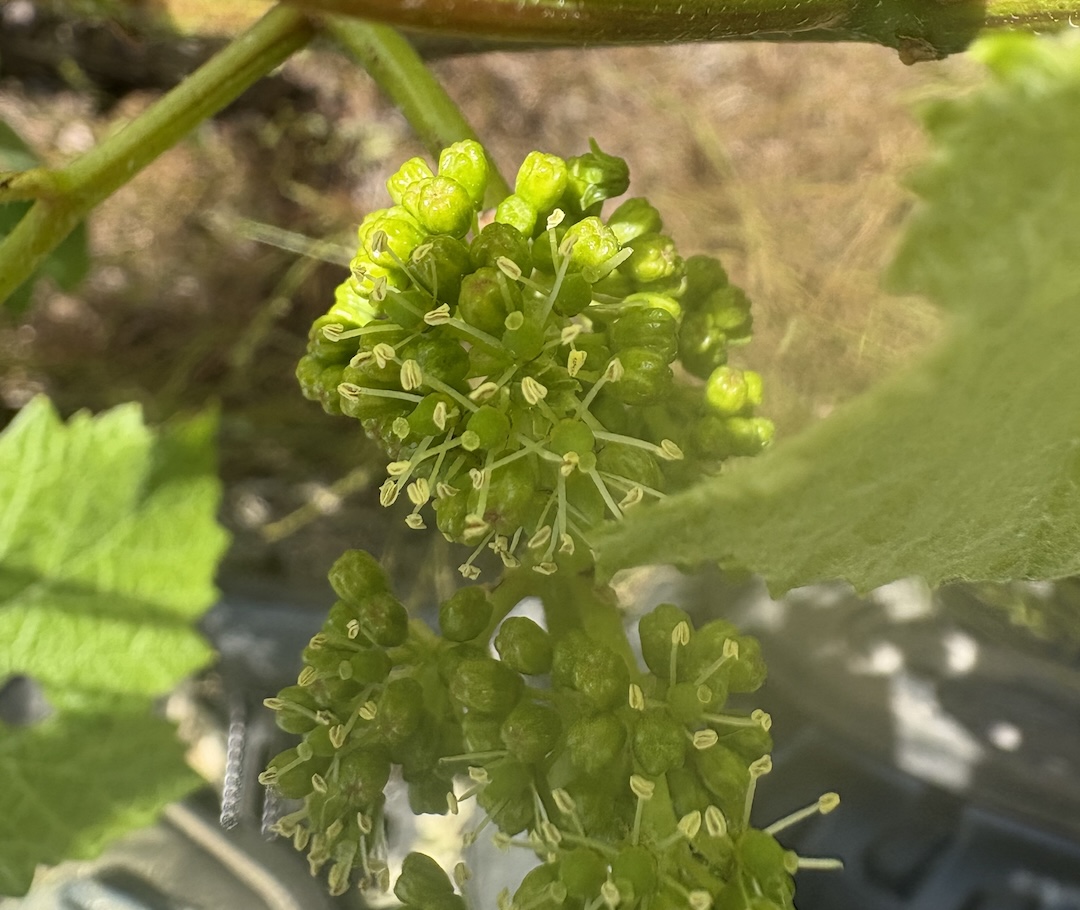
Photo: Flowering vines at Natalie’s Estate Winery
Every bottle of wine begins long before harvest. Long before clusters ripen and wines are crafted in the cellar, there is a brief but incredibly important stage in the vineyard: flowering and fruit set.
At Natalie’s Estate Winery, this time of year marks one of the most exciting transitions in the growing season. The vineyard shifts from rapid canopy growth into the beginning of grape production itself. It is a short window, but what happens during flowering and fruit set can influence the entire vintage.
What Is Flowering?
After budbreak and early shoot growth in spring, grapevines begin developing tiny flower clusters. Unlike the showy flowers many people imagine, grapevine flowers are small, delicate, and often easy to overlook.
Flowering typically occurs in late spring to early summer depending on weather conditions and vineyard season in Oregon.
During this stage, each flower opens and self-pollinates. Grapevines are remarkably efficient and generally do not require bees for pollination. Instead, warm temperatures, gentle conditions, and healthy vines allow pollination to occur naturally.
While flowering may not look dramatic, it represents one of the most important moments of the season because it determines the vineyard’s potential crop.
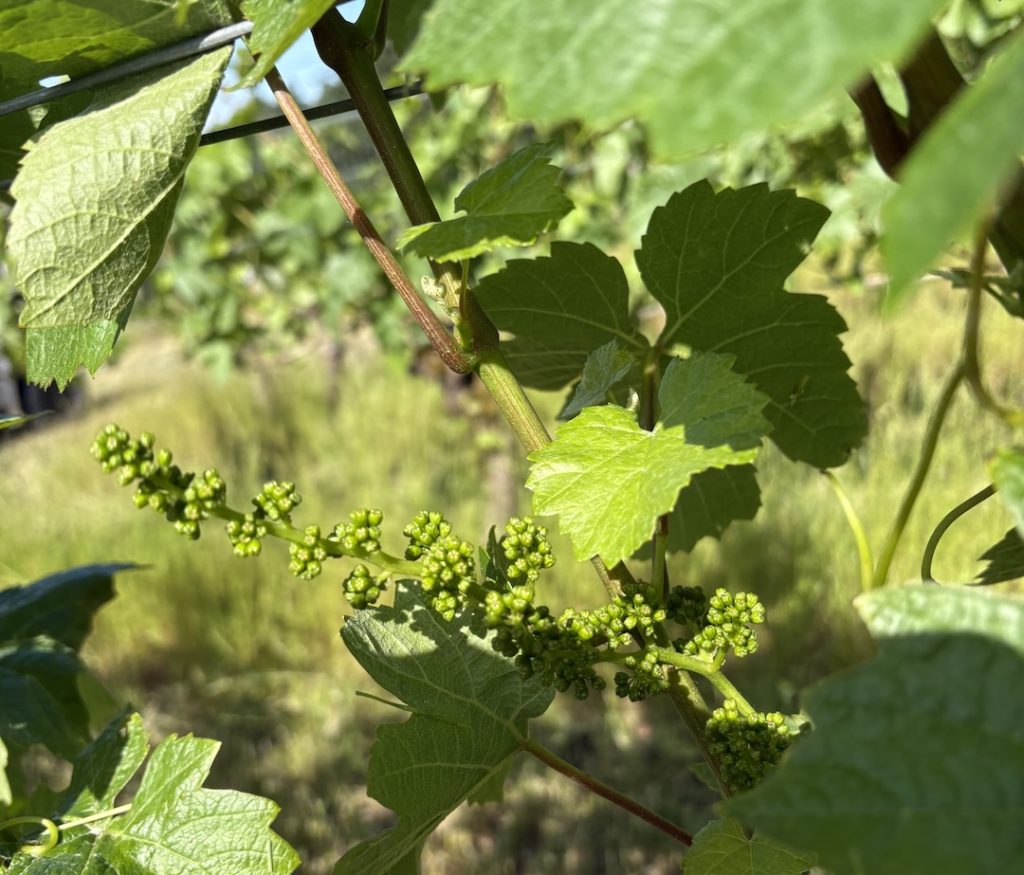
Photo: Fruit Set at Natalie’s Estate Winery
What Is Fruit Set?
Once pollination is successful, the flowers begin transforming into tiny green grapes. This process is called “fruit set” in vineyards.
Fruit set determines how many grapes will ultimately develop in each cluster.
You may notice clusters that suddenly look fuller and more defined as the berries begin forming. At this stage, the vineyard starts to reveal hints of what the harvest could look like months later.
However, not every flower becomes a grape.
Weather plays an important role during flowering and fruit set. Conditions that are too cool, windy, or rainy can reduce pollination success and result in fewer berries developing. Warm, stable weather generally supports more consistent fruit set and balanced cluster development.
For winemakers, this is one of the first opportunities to begin understanding the personality of the vintage.
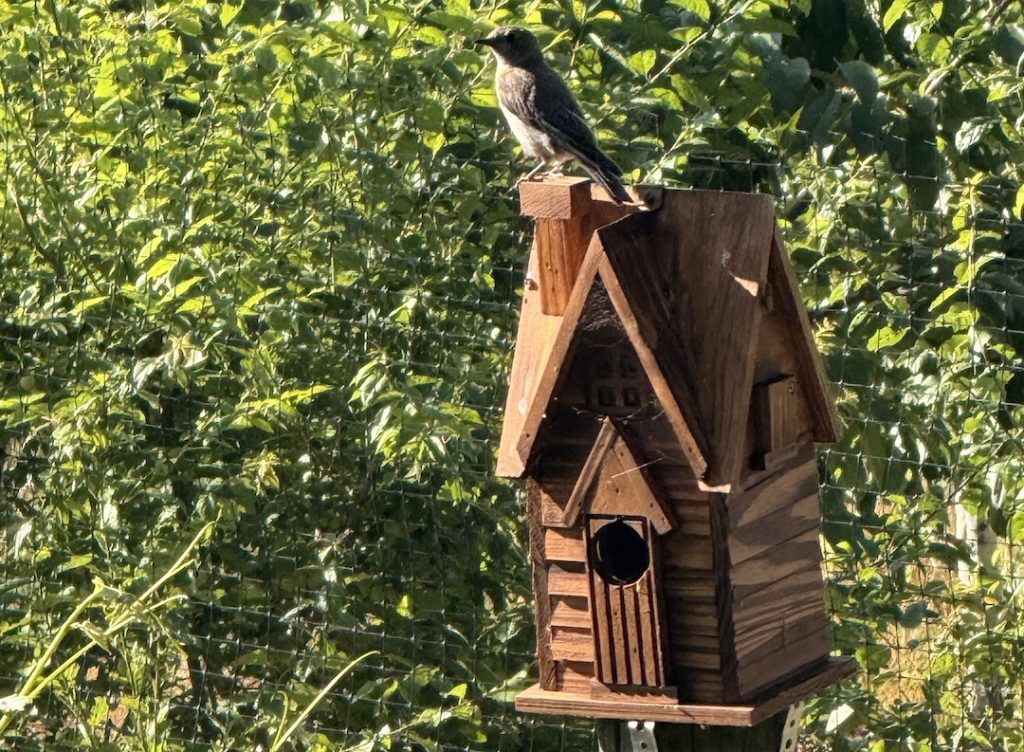
Photo: Bluebird house encourages natural pests in the vineyard
Supporting Healthy Vineyard Development
At Natalie’s Estate Winery, our approach during flowering and fruit set reflects our commitment to regenerative farming and thoughtful stewardship of the land.
Much of our vineyard work is completed by hand, allowing us to stay closely connected to each row and respond carefully to what the vines need throughout the season.
We also intentionally leave half of our property uncultivated as natural habitat, supporting biodiversity and creating balance throughout the vineyard ecosystem.
Rather than relying heavily on intervention, we encourage natural methods for pest management whenever possible. You’ll find bluebird houses throughout the property that help support healthy bird populations and contribute to natural insect control.
Our vineyard practices also include:
- No-till farming to protect soil structure and beneficial microbial life
- Boron applications to support vine health during flowering
- Kelp applications as a natural nutrient boost for overall vine vitality
- SimpleGreen Spray as part of our thoughtful approach to helping manage mites and powdery mildew pressure
These practices support healthier vines and help create balanced fruit development throughout the season.
Why This Stage Matters for Wine Quality
Flowering and fruit set do more than determine yield—they begin shaping wine quality.
Cluster size, berry spacing, and overall vine balance influence how grapes ripen throughout summer and fall. Smaller, balanced yields can contribute to concentration and flavor development, while healthy canopies help preserve freshness and complexity.
Every growing season is different, which is part of what makes wine so fascinating.
Walking through the vineyard during flowering is a reminder that each vintage starts with thousands of tiny decisions made by nature—and guided carefully by the vineyard team.
The next time you enjoy a glass of Natalie’s Estate wine, remember that months earlier, the journey began with flowers you almost couldn’t see.
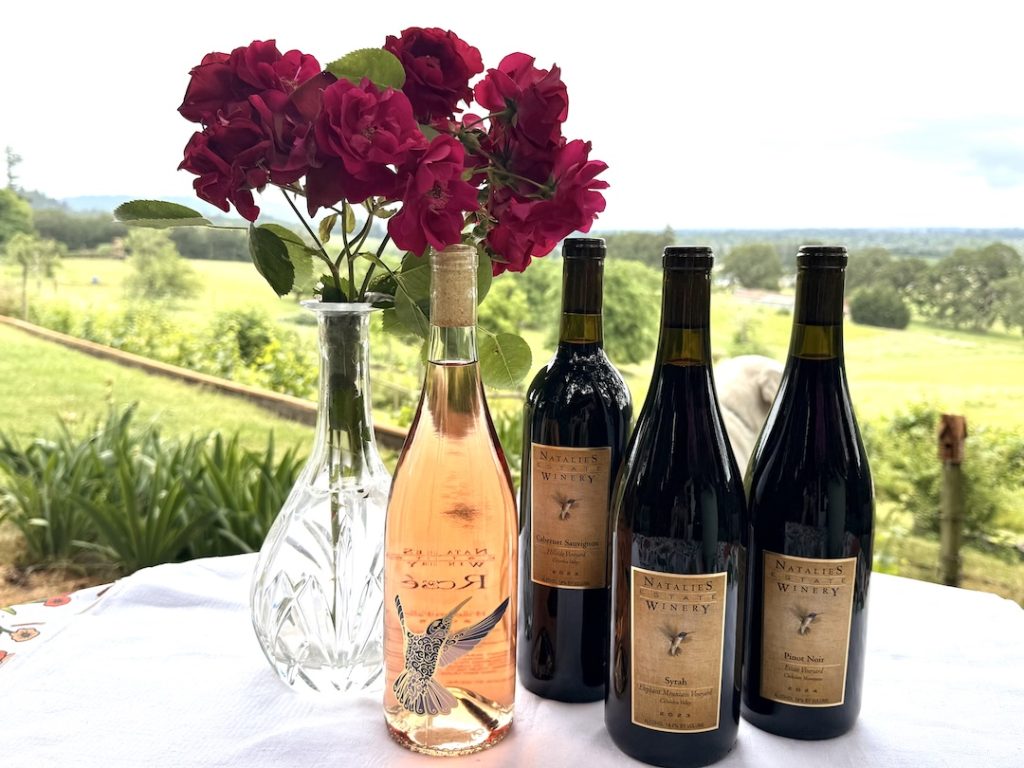
Photo: Wine tasting flight at Natalie’s Estate vineyard
We invite you to experience the vineyard through every season at Natalie’s Estate Winery. Whether you join us for a wine tasting in Newberg, Oregon, or explore the vines more closely during a vineyard tour, there’s nothing like seeing firsthand how thousands of tiny flowers become the wines in your glass.
Reserve your experience today and discover the story behind every vintage:
https://block55.app/location/natalies_estate
Learn More:
A Year in the Vineyard – Budbreak: The Moment a Vintage Begins
Sustainability in the Vineyard: Farming with Intention at Natalie’s Estate Winery
Why We Prune the Vineyard: How Vineyard Pruning Shapes Quality